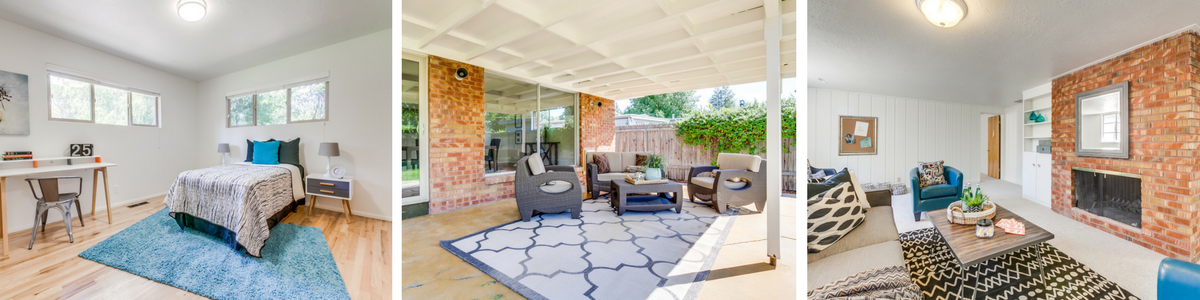
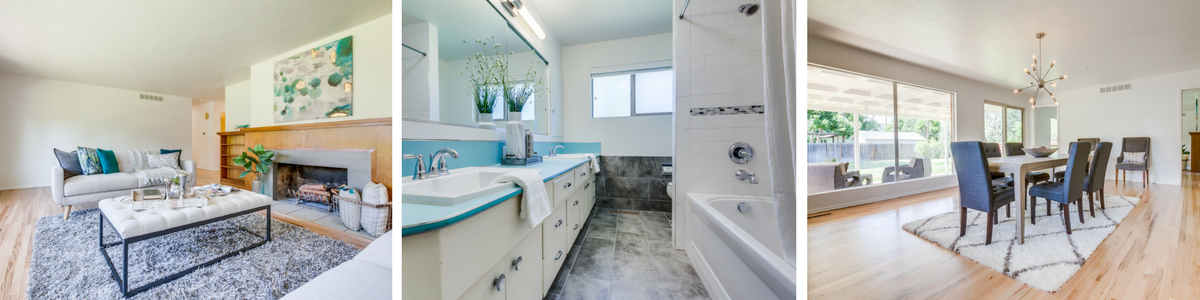
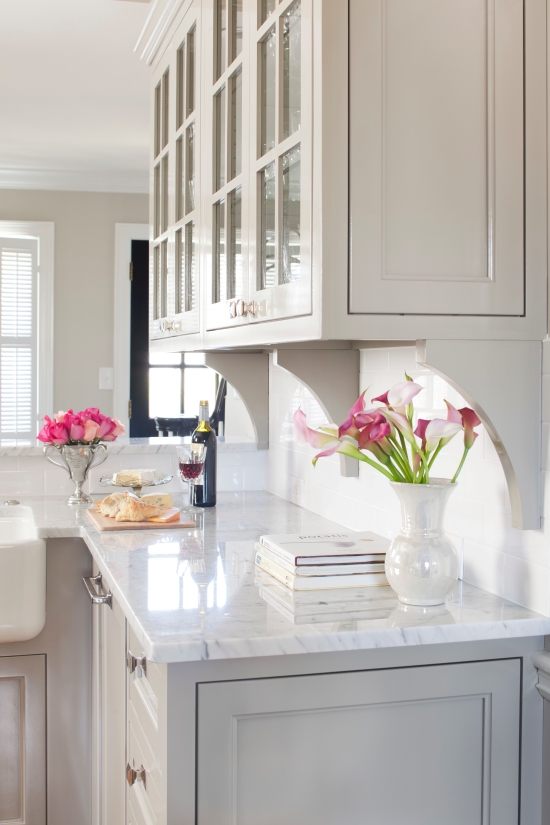
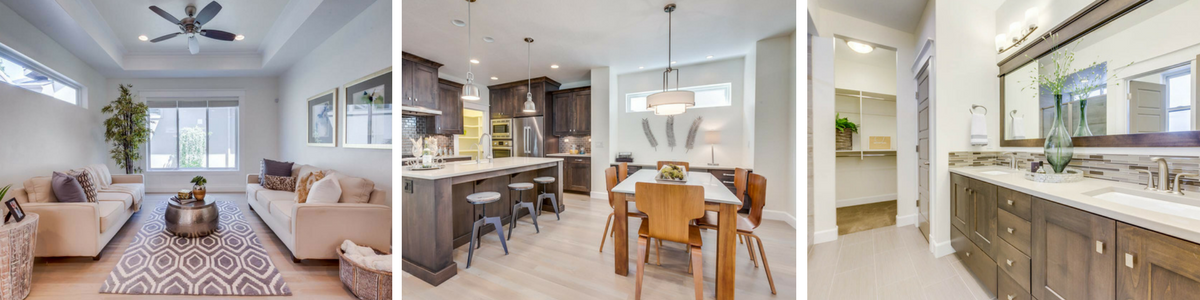
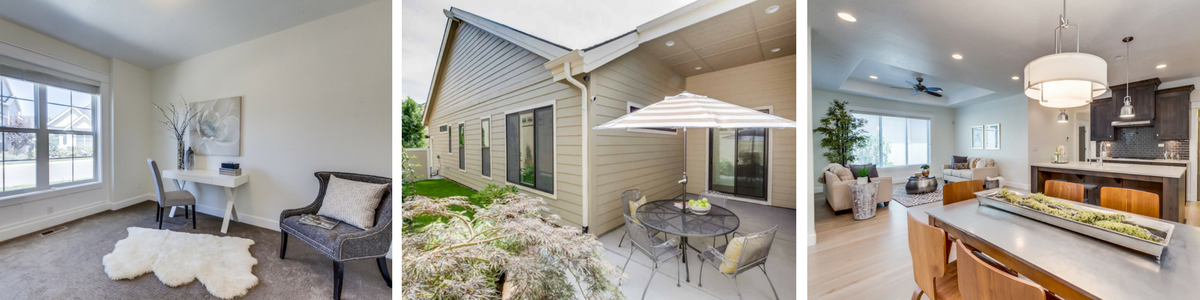
This Mill District Square single-level is a rare East Boise gem! Incredible location is full of community perks including two clubhouses, large rec center, and two swimming pools. Enjoy a relaxing morning at the brand new Coffee Mill or patio dining at Lucky 13 – both just a short walk away!
The contemporary interior features beautiful custom coffered ceilings in the family and master bedroom. Entertaining is made easy with an open floor plan, spacious quartz kitchen island, and covered patio. Low-maintenance yard with privacy fence. Gorgeous hardwood underfoot in the kitchen, dining, and family room. Fabulous kitchen with sleek fixtures and finishes, a large breakfast bar, ample storage, and a built-in buffet/tech space. Impressive master bath with walk-in shower, dual vanity, and walk-in closet. Two car garage offers additional 10′ x 5′ multi-use storage space.
It’s a question many of us here in Boise have asked ourselves at one time or another…maybe you are pondering now. Should I stay in my house and renovate it or should I move? Well, there are considerations that have to be weighed before making this decision.
First, consider your current location and neighborhood. Do you love it, and your neighbors? And, if you put money into improvements, will you outprice your house for your neighborhood. Nobody wants to own the most expensive house on the street, because if you have to sell down the road, you likely won’t get back what you put in (as comparable sales may drive down your price).
Also, you will want to consider your finances. A new house means qualifying for a new mortgage. If you recently changed jobs, have incurred substantial debt or anticipate other big ticket purchases coming your way, the timing may not be right for a mortgage application. If you have a decent amount of equity built up in your current house, you may be able to swing a home equity loan to pay for renovations. Keep in mind that a home equity loan will also incur closing costs such as appraisals, title insurance and credit reports. Buying a new home, and selling your current home, also means real estate commissions, seller closing costs and the expenses involved in moving your belongings from one location to another.
Another factor is how long you plan to be in your house. If your answer is at least five to 10 years — making significant changes, such as adding rooms, building a sunroom, or finishing a basement, may provide a worthwhile payback and incentive. If, however, your plan is to move within five years, a major remodeling project may not be the most prudent financial decision.
In addition, if the house was built more than 30 years ago and hasn’t been updated, it may require new wiring or plumbing, a new HVAC system or roof, and better insulation. Tearing into walls can also uncover unseen problems that may need to be fixed and more expense to meet current building codes. It might prove worthwhile to bring in a contractor or architect to estimate costs of any big changes such as new insulation, removing some walls, or adding on.
It may be worthwhile to contact an experienced real estate agent to show you homes in your price range, so that you can see what your money can buy you. You may find a house that is already updated, with the right layout and number of bedrooms, and decide this may be the best option for you.
Making the decision to remodel your current house or move to a new one is not an easy decision. But if you’re asking the question, chances are you’ll be better off making some kind of change. If your house no longer fits your family’s needs, a home renovation might fix the problem, but so could putting your house up for sale and finding another one. No matter what your end game, you should be aware of what updates and improvements will gain you the most returns. Not all improvements are the same.
According to the Remodeling 2017 Cost vs. Value Report (www.costvsvalue.com), here is the breakdown of costs and ROI for renovations in the Boise area for midrange and upscale homes:
Keep in mind that if you decide to do a renovation on your house, you will want to find a reputable contractor. Use these tips to understand what you should be looking for:
If you are unhappy with your current house and would like to talk with us about what your options are, give us a call! Templeton Real Estate Group—208.473.2203 or via the web. We offer a free and confidential consultation. And, if you choose to list with us, we offer a complimentary staging service that, combined with our marketing expertise, will sell your house for more. You may not need to spend a lot in improvements to sell…staging may be all you need to make your house shine. We are TOP BOISE REAL ESTATE agents who know Boise real estate.
Whether you are buying or selling, we will work hard for you and make your experience hassle-free. We want to do such a great job that our clients would never consider hiring anybody else except us if they were in need of real estate services in the future!!
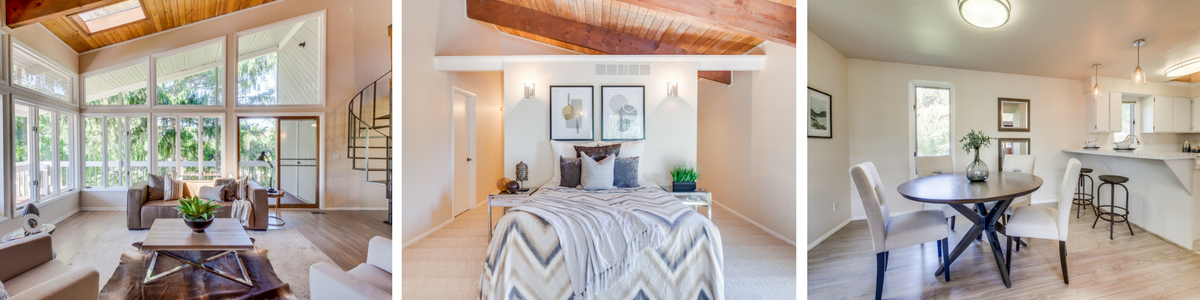
Unique Warm Springs Mesa home with industrial flare throughout.
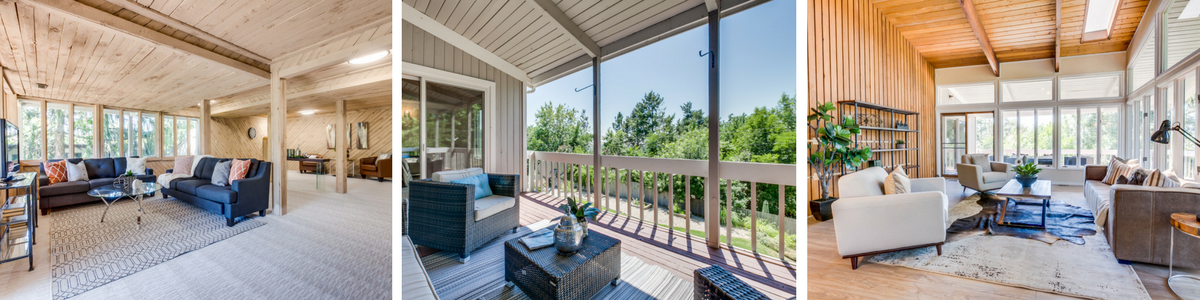
Amazing floor-to-ceiling windows provide abundant natural light and an incredible indoor-outdoor connection. The stellar wrap around patio has tons of shaded space for outdoor seating and entertaining with a great view of the surrounding mature landscaping. Steel spiral staircase leading to the upper loft and the exposed wood beams create an artistic atmosphere. Impressive daylightbasement perfect for entertaining/rec room. Modern updates throughout! Updates include new carpet, modern light fixtures, and upgraded basement bathroom. Master bedroom features a spacious walk-through closet and private access to the large covered porch. Huge fully fenced backyard with a second covered patio.
Fabulous North East Boise location near numerous foothill trails with stunning Boise views! Short distance to downtown, Boise River, Greenbelt, Bown Crossing, and more!
Stop by on Sunday, July 23rd from 1-3pm for a tour!
We recently read a blog on Realtor.com that struck a chord with us. The blog was about rookie mistakes that keep people from selling their homes. Believe it or not, even In Boise’s hot real estate market, inexperienced sellers can make mistakes that will cost them in the end.
What are we talking about? Well, when we say that you should interview real estate agents before you hire them, there’s a reason. If you, the seller, do your due diligence and hire a realtor who is experienced and understands your marketplace, you should trust that they will know how to price your house to sell quickly and for the most it will sell for. That doesn’t mean that you shouldn’t ask questions or have your own opinions. You should. And, you should expect your agent to be able to answer those questions and entertain your opinions to your satisfaction and defend their reasoning.
We recently (and gratefully) had a client who insisted on listing their house above our recommended price. The house had been listed with two previous agents for the same amount — and never sold. This house sat on the market — a very hot market — for well above the time that other homes in East Boise had been active. We did eventually sell it, once the seller agreed to lower it to the price we had suggested. Moral of the story? Hire a great and experienced agent and trust them to do the best for you!
The good news? Mistakes can be avoided and we think the following are great tips and want to share what Daniel Bortz, a Realtor in Maryland, Virginia, and Washington, DC (who’s written for Money magazine, Entrepreneur magazine, CNNMoney, etc.) wrote for Realtor.com:
Rookie mistake No. 1: Overpricing your home
All sellers want to get top dollar for their house. Unfortunately, says Julie McDonough, a real estate agent in Southern California, “many people overestimate the value of their home.” For example, she says, “if a neighbor sells their house for $400,000, you might automatically assume that your house is worth at least that much money, but that’s not necessarily the case.
Price is typically the reason why a house doesn’t sell,” says Irvine, CA, real estate agent Benny Kang. And the last thing you want to do is list too high right from the start, because it could cause your house to sit on the market—which might require you to make a serious price reduction in order to sell it. “If a home is on the market for more than four weeks, prospective buyers are going to assume that there is something wrong with it,” says Kang.
Your best approach: Listen to your agent’s listing price recommendation, and try not to get too emotional if your agent’s suggestion isn’t as high as you’d hoped.
Rookie mistake No. 2: Not budging on price
Even if the price is right, you might need to be flexible—especially if you’re in a buyer’s market. So, if you receive an offer that’s below list price, you should at least consider making a counteroffer. After all, receiving $5,000 or $10,000 less for your house than what you wanted is a small concession in the long term.
Rookie mistake No. 3: Doing a lousy job of cleaning
Let’s make this clear: Your home needs to be spotless. That might mean hiring a professional cleaner to do a deep and thorough cleaning of the entire place. You might want to consider renting a storage locker to make the process of cleaning out the garage, closets, and attic less onerous. But it will likely be worth it, because clutter distract buyers in a big way.
Bonus: A clean house will also enable you to take great photographs for your listing (see our next point).
Rookie mistake No. 4: Using crummy photographs
Unless you’re an artist with the camera, you’ll want to hire a professional photographer to take pictures of the house, because nearly half of home buyers start their search online, a recent survey by the National Association of Realtors® found. “You can write a beautiful description, but people aren’t initially focusing on the description,” says Philadelphia real estate agent PatrickConway. “They’re looking at the pictures.”
Rookie mistake No. 5: Leaving religious or political belongings in plain sight
“You never know what type of buyer is going to look at your house,” says McDonough, so put away all personal belongings—specifically, religious or political items, which can be awfully polarizing. “You don’t want anything that’s going to distract buyers.”
Rookie mistake No. 6: Lurking around at your own open house
This is a huge mistake for several reasons. “If the buyer knows that the seller is there, they might feel uncomfortable asking the listing agent honest questions about the home,” says Kang. Buyers might also feel like they’re intruding if you’re present, which is kind of crazy. “People like to open closet doors and look closely at the home without someone hovering over their shoulder,” says Conway.
Rookie mistake No. 7: Making it difficult for agents to show your home
When selling your house, “be prepared for little privacy,” says Kang. Translation: You’ll need to be flexible when buyers ask to see your home on short notice. To make it easy for buyer’s agents to show the property while you’re away (see No. 6), let your agent install a lockbox with keys to the house, advises Conway.
Rookie mistake No. 8: Leaving pets at home during showings
Some people are simply scared of pets, (yes, even your cute little pug), or they might have allergies that will make them want to steer clear. So don’t just crate your dog or cat during showings; instead, take them with you or drop them off with a neighbor while buyers are viewing the house. And because pets, like humans, tend to accumulate lots of stuff—leashes, collars, toys, water bowls, and the like—make sure you stow their paraphernalia in a cupboard or closet. And do a quick vacuum of pet hair before you go!
Speaking of pets, sometimes they smell, as do other things — use the tips in this video to help the appeal of your home to potential buyers!
We love our clients, and we always strive to work our hardest and do our best to ensure their satisfaction. In fact, we want every client we work for to say that selling or buying a home with us was the best experience for them. We want to do such a great job that our clients would never consider hiring anybody else except us if they were in need of real estate services in the future!!
If you are thinking about selling or buying in Boise, call Templeton Real Estate Group—208.473.2203 or via the web today. We offer a free and confidential consultation. And, if you choose to list with us, we offer a complimentary staging service that, combined with our marketing expertise, will sell your house for more. We are TOP BOISE REAL ESTATE agents who know Boise real estate.
Woo hoo, it’s summer time and for Boiseans that means weekend trips to the mountains ? McCall and Sun Valley, or maybe longer getaways to faraway places! It’s what you work so hard for all year ? your vacation time.
So, while you are away relaxing and enjoying yourself, the last thing you want to worry about are thieves scoping out your empty house. The U.S. Bureau of Justice Statistics has found that household burglary rates are highest in the summer.
Avoid posting vacation photos to social media while you are away. Share your fun after you get home.
You may also consider saving on electricity and safeguarding against other dangers that could be lurking while you are away.
The good news is that by following these easy tips, provided by Safety.com, you can enjoy yourself and leave your worries at home.
Tips to Keep Your House Protected While on Vacation:
1. Hold Your Mail
A huge pile of mail on the front doorstep, or envelopes pouring out your mail slot is an instant tip-off that no one’s home. If you’ll be gone for more than a few days, go to the post office (or you can arrange for this online) to place a hold on your mail. Put a hold on your daily paper, too. If you don’t have the time or inclination, ask a trusted neighbor to collect the goods daily.
2. Create the Illusion of Someone Home
Beyond setting your lights on a timer, you can also set the television and radio on a timer to create the typical noise and flickering lights of an average family home at night. But wait, that’s not all! Leave a car in the driveway. Arrange for someone to mow at least once a week (an unruly lawn is as bad as a pile of mail). If you normally leave toys outside, or keep a hose unrolled, or do anything that shows signs of a home being lived in, don’t tidy up too much before you leave.
3. Mum’s the Word
Never, ever announce your departure or vacation dates on social networks. Sharing settings are not foolproof and with new security updates it’s always hard to tell what’s public and what’s private. Stay on the safe side, and don’t mention your trip – until you’re back, with tales to tell and photos to upload!
4. Trust a Friend
Give your vacation contact info and a spare key to at least one friend or neighbor. That way, they’ll know how to contact you in case of emergency.
5. Advertise Your Security
Especially when you’re away, it can be a great idea to advertise your security measures. If you’re worried that alarm company signs will clue thieves in to how to break in, buy signs from a different company. Install fake security cameras (the kind that look authentic). Do whatever it takes to get across the message, “This is not the home you are looking for.”
6. Unplug
Unplug all unnecessary appliances (except those on timers, of course) to protect your home from an electrical fire or power surge. This goes for the big stuff, like TVs, but also for your toaster, your coffee maker, and other small appliances.
7. Hide the Hide-a-Key
It’s impossible to forget your key if you’re not even home, so go ahead and take any hidden spare keys out of commission. Just don’t forget to re-hide them when you return!
8. Keep Your Cool
Adjust the thermostat to save on electricity while you’re gone. During the summer, set your air-conditioning to 85°. You can also lower the temperature on your water heater.
9. Safe-Keep Your Valuables
Lock up jewelry, the deed to your home, wills, and any other valuables or sensitive documents in a fire-proof safe. At the very least, keep them out of view.
10. Alert Your Alarm Company
Call your home security company to let them know you’ll be away. Make sure all of the door and window alarms are set and working when you leave.
11. Install motion sensor lights
Install motion sensor lights on the perimeter of your home. Crime experts say that by simply tripping a light, a burglar may get scared off.
Video Tips to Keep Your Home Safe While on Summer (and Winter) Vacation:
Are you looking to buy or sell in Boise? Let us help you out! Call Templeton Real Estate Group@ 208.473.2203. We will work for you! We are a small yet highly skilled real estate team with decades of area expertise, service, property pricing, and negotiating. We are passionate about providing our clients with the best real estate experience available. Our office is located in East Boise’s beautiful Bown Crossing, just steps to Boise’s Greenbelt. You can learn more about the Templeton Real Estate Group by reading what our clients say about us, on Realtor.com or contact us today to schedule your complimentary and confidential consultation. We can also sell your house faster and for more using the latest marketing and our beautiful and complimentary in-house staging expertise!
Incredible location within walking distance to BSU! Nearby shopping, restaurants, city parks, and close proximity to the Boise Greenbelt.
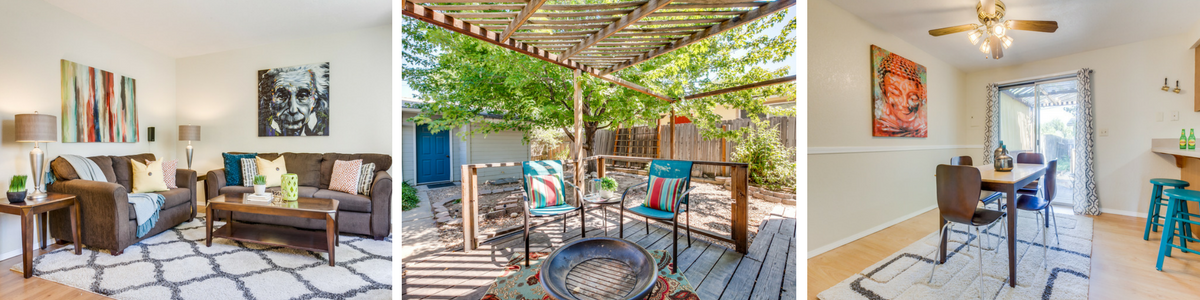
This adorable townhouse is a perfect starter home or investor opportunity. The interior features durable laminate wood floors on the main level, bay windows in the spacious living room, a large dining room, and sizable bedrooms.
Fully fenced low-maintenance backyard includes a comfortable covered patio . No HOA fees, long rental history, and a desirable location for students.
For directions and more information on this home, click here!
To learn more about your Top East Boise Realtors, click here!
It may not be a sexy topic, but fireproofing your home is essential and something you should take seriously. If you live in Boise, you know that our summers are especially hot and dry making our homes vulnerable to fire. And, if you have lived through a wildfire, as I have (thankfully with lives and house intact), you know how fast it can spread and how scary it is.
After I was evacuated from my East Boise home a few years back, I remember driving down my street and wondering if that was the last time I would see my house—and my belongings. It was a typical hot, late August afternoon and I had family visiting from out-of-town. The kids were playing in the backyard pool, the guys were keeping watch over steaks on the grill, and my sister and I were sipping wine and tending to dinner on the stove. It was a lovely day … and then everything changed.
A gusty wind picked up, turning the blue sky brown, and we watched as the blowing dust obscured our view of the foothills. Soon after, a plume of smoke could be seen close by, followed by police on loud speakers ordering us to evacuate as fire was heading our way. After several dramatic hours, several nearby homes destroyed and, most tragic of all, a life lost, we were safely back in our homes. The fire never actually made it to our fence line, thanks to the brave men and women of the Boise Fire Department, Bureau of Land Management team, Boise Police Department, other emergency responders, and my hose-wielding husband who ignored evacuation orders and stayed behind to soak down everything within reach. However, this event made me realize how woefully unprepared we, and our house was, for an event like this.
There are things we can all do to ensure our homes and our families are protected from these types of incidents. We need to take personal responsibility and prepare long before the threat of a wildland fire so our homes are ready in case it happens. Create defensible space by clearing brush away from your home. Use fire-resistant landscaping and harden your home with fire-safe construction measures. Assemble emergency supplies and belongings in a safe place. Plan escape routes and make sure all those residing within the home know the plan of action.
Homeowner Checklist for Action Steps:
Clear needles, leaves and other debris from the roof, gutters, eaves, porches and decks. This reduces the chances of embers igniting your home.
To reduce ember penetration, replace or repair loose or missing roof shingles or tiles, and caulk any gaps or openings on roof edges.
Cover exterior attic vents, and enclose under-eave and soffit vents with metal wire mesh no larger than 1/8 inch to prevent embers from entering the home.
Remove items stored under decks or porches; replace vegetation in these areas with rock or gravel.
Replace mulch with hardscaping, including rock, gravel or stone. If it can catch fire, don’t let it touch your house, deck or porch.
Remove flammable items within 30 feet of all structures including firewood piles, portable propane tanks and dry and dead vegetation.
Dry grass and shrubs are fuel for wildfire so keep your lawn hydrated and maintained. If it is brown, trim it to reduce fire intensity, and don’t let debris and lawn cuttings linger. Dispose of these items quickly to reduce fuel for fire.
Fire can spread to tree tops. If you have tall trees on your property, prune low hanging branches 6 to 10 feet from the ground and for smaller trees, prune low hanging branches no more than a third of the tree’s height. Remove tall grasses, vines and shrubs from under trees.
Talk to your neighbors and create a plan. Neighbors are linked by their wildfire risk. If one home is inadequately prepared, the risk level to the entire neighborhood increases, and everyone’s safety is impacted. Work with your neighbors to make a difference.
Lessons were learned from the tragic Oregon Trail fire of 2008, and the City of Boise is also doing its part to help mitigate future fires. The City now has a dedicated interdepartmental wildfire mitigation team, a set of building and fire prevention codes specific to the wildland-urban interface (WUI) and it has brought in stakeholders and built numerous partnerships in this arena. However, homeowners are the first line of defense and it is up to us to do our part for the safety of our homes, families and neighborhoods.
If you are looking for a beautiful new home in East Boise, call Templeton Real Estate Group—208.473.2203 today. Our years of expertise and knowledge will guide you through the process, selling and/or buying, and answer all of your questions! We are TOP BOISE REAL ESTATE agents who know Boise real estate. We would love to help you find your dream home!
Buying Real Estate is a time-honored great investment for your future. In fact, if you are in it for the long-term, it may likely give you the largest return on your money. And, doesn’t it make ‘cents’ to pay your own monthly mortgage payment versus paying somebody else’s mortgage in rent here in Boise?
Of course, the largest hurdle for many is coming up with a down payment. However, there is help out there for first-time home buyers. Programs are set up to help buyers get over the hump of a large down payment and closing costs. And, if you are selling your current home to move up, consider hiring a real estate company that uses the best marketing tools and staging to earn you top dollar for your home. The more profit you make from your existing sale, the more you can put down on your new, dream home!
So, what are some of the fears people face when buying a home? The Home Buying Institute conducted a study and here are the results:
As shown above, the responses broke down as such:
36.4% said they were afraid of ending up with a mortgage payment that’s too big.
22.7% feared they might pay more for a home than it’s worth.
15.9% were afraid of losing their jobs after taking on a mortgage loan.
10.2% were concerned about buying a home with major structural problems.
4.5% were afraid of choosing the wrong type of mortgage loan.
4.5% feared another housing bubble-and-bust cycle.
Let’s Tackle Some of These Home Buyer Fears:
Brandon Cornett, publisher of the Home Buying Institute, explained his company’s motivations for running the survey. “More than anything, we wanted to identify the knowledge gaps among our readers. By understanding what scares home buyers the most, we are better able to publish meaningful content. We can write articles and tutorials that address these fears.”
If you’re afraid of having a mortgage payment that’s too large:
Home buyers who are concerned about an over-sized mortgage payment should establish a budget for themselves. By reviewing your monthly income and debt expenses, you can set a monthly limit for your housing costs. It’s important to do this before you apply for a mortgage loan. Believe it or not, you can be approved for a mortgage amount that exceeds your comfort level. So do the math for yourself. Find out what you can comfortably afford to spend each month. You can learn more about mortgage affordability here and here.
If you’re afraid of paying more than the home is worth:
Home buyers should know it’s called an “asking price” for a reason. Just because a home is listed for a certain amount doesn’t mean it’s worth that much. Our research shows that many homes are initially listed above their market values. Call it wishful thinking on the seller’s part. As a home buyer, the last thing you want to do is overpay for a house. It erodes your equity from day one. But this situation can easily be avoided. You should base your offer on recent sales in the area.
If you’re afraid of losing a job (and your ability to make payments):
Double-income couples need to consider the impact of one spouse losing a job. If you can’t cover the mortgage payments on a single income for a few months, you may be buying too much house. Make sure you have an emergency fund to protect you in such scenarios. This means having enough money in your savings account to cover up to six months worth of mortgage payments. The emergency fund is even more important for single-income families.
If you’re afraid of buying a home with major flaws:
Every home buyer should pay for a home inspection. It only costs a few hundred dollars, and it gives you the peace of mind of knowing what lies beneath. A home inspector will slap on a pair of coveralls and get into the guts of the house. He will examine the foundation, the attic, the roof, and all of the installed systems (plumbing, electrical, HVAC, etc.). If there’s a major problem with the house, a professional home inspector will find it. You can learn more about home inspections in this FAQ article.
If you’re afraid of choosing the wrong type of mortgage loan:
Research is the key to success here. You should start by learning the key differences between adjustable and fixed-rate mortgages. This is where a lot of first-time buyers get into trouble, choosing the riskier ARM loan for a long-term stay. You should also consider the pros and cons of FHA home loans, one of the most popular financing methods today. You can learn more about the different types of mortgage loans on this page.
Buying a home can be one of the most exciting times of your life, and one of your best investments. Treat it seriously and do your homework. Knowledge and preparedness are power and will alleviate any fear! And, please call Templeton Real Estate Group—208.473.2203. Our years of expertise and knowledge will guide you through the process, selling and/or buying, and answer all of your questions! We are TOP BOISE REAL ESTATE agents who know Boise real estate.
Rare opportunity to live on charming Jantoni Drive – a very private nook in the East End where historic homes rarely become available!
This adorable home has original hardwood, built-ins and brick details. Brand new carpet and interior paint. The guest bathroom was tastefully updated while maintaining charm. Spacious formal dining room has endless potential.
Plentiful windows on the main level provide abundant light throughout. Huge covered patio is perfect for entertaining on long summer days.
Large basement is the perfect space for a rec room with a brick gas fireplace and original built-ins. Plentiful storage, work space & multi-use shelving.
Just blocks to foothill trails, Boise River, Greenbelt, Table Rock & Idaho Botanical Gardens.
Visit Meg this Sunday, July 9th from 1-3pm and get an exclusive tour!
We all know that the kitchen is the hub of the house. It always has been. A gathering place for friends and family, no matter if it’s the kids talking about the day’s events on any given weeknight or a big Saturday celebration with friends—everybody congregates in the kitchen. Perhaps that’s why ‘kitchens sell homes.’
So, it’s great we’ve started giving this important room some love. Whether you are going to live in your house a while or you are selling, having an updated kitchen will reap you rewards.
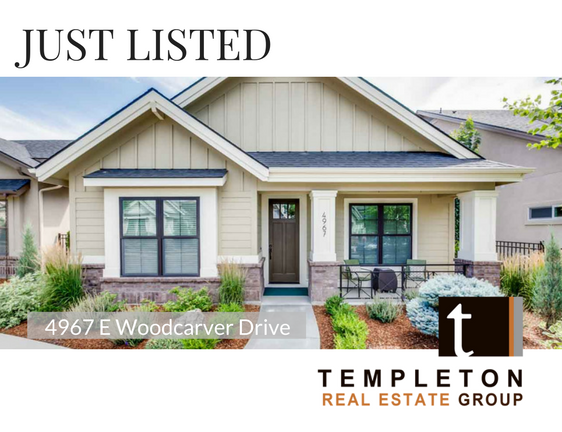
While decorating our family rooms, dining rooms and bedrooms with the most current design trends, we should also be including our kitchens! Gone are the days of drab brown cabinets. Painted cabinets have completely changed the look of kitchens—from muted tones to rich navy blues and emerald greens, to two-toned—the options are endless.
Neutrals
Stephanie Pierce, director of design and trends at MasterBrand Cabinets, said, “Whites and grays fall into this category, but so do taupe tones and even deeply saturated colors. Taupe tones continue to make an impact in kitchens as opaque or painted finishes are trendy and highly versatile. The varying shades range from a warmer off-white to khaki and pick up undertones of green or blush depending on how they are being used.”
Neutral paint colors work well with most design styles. They also are safer color choices because they easily complement and blend with other tones used in a kitchen, such as flooring and accent colors.
Deeper cabinet paint colors have been a popular trend this year as well, says Sue Wadden, director of color marketing for Sherwin-Williams. Shades like navy, silted teal, dark gray, and rich brown have surged in popularity this year and work best paired with white or neutral walls for contrast.
When using a deeper hue, choose a color with a balanced mix of warm and cool undertones, which will help in complementing surrounding undertones and colors throughout the kitchen.
If color is your thing, your kitchen can reflect the personality of your home by adding a fun backslash or cabinet hardware. Since painting cabinets can be time-consuming and costly, you may want to avoid trendy or bright colors unless you know you will want to live with it for quite a while. And, if selling your house in the near future may be a possibility, cabinetry is harder to change out than a backsplash or wall paint would be. Less expensive and easier still, you can spice up your kitchen with some colorful counter stools or table chairs. You can also add pops of color with a tea kettle that lives on the stove, artwork, table runner or linens dotted throughout your space.
Most importantly, design and decorate your kitchen with things and colors that make you happy. Kitchens don’t have to be all business. While you’re cooking a meal or baking up your next yummy treat, you’ll also reward yourself with some eye candy!
 It’s a question many of us here in

 Avoid posting vacation photos to social media while you are away.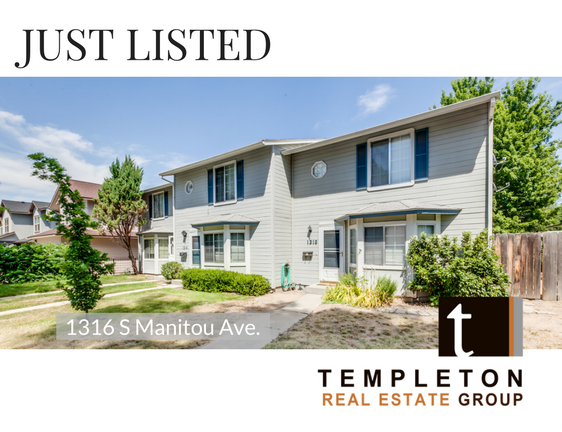
 It may not be a sexy topic, but fireproofing your home is essential and something you should take seriously. If you live in Boise, you know that our summers are especially hot and dry making our homes vulnerable to fire. And, if you have lived through a wildfire, as I have (thankfully with lives and house intact), you know how fast it can spread and how scary it is.